
Red, Blue, Green: Why Milk Packets Come In Different Colours In India?
3 hours from now

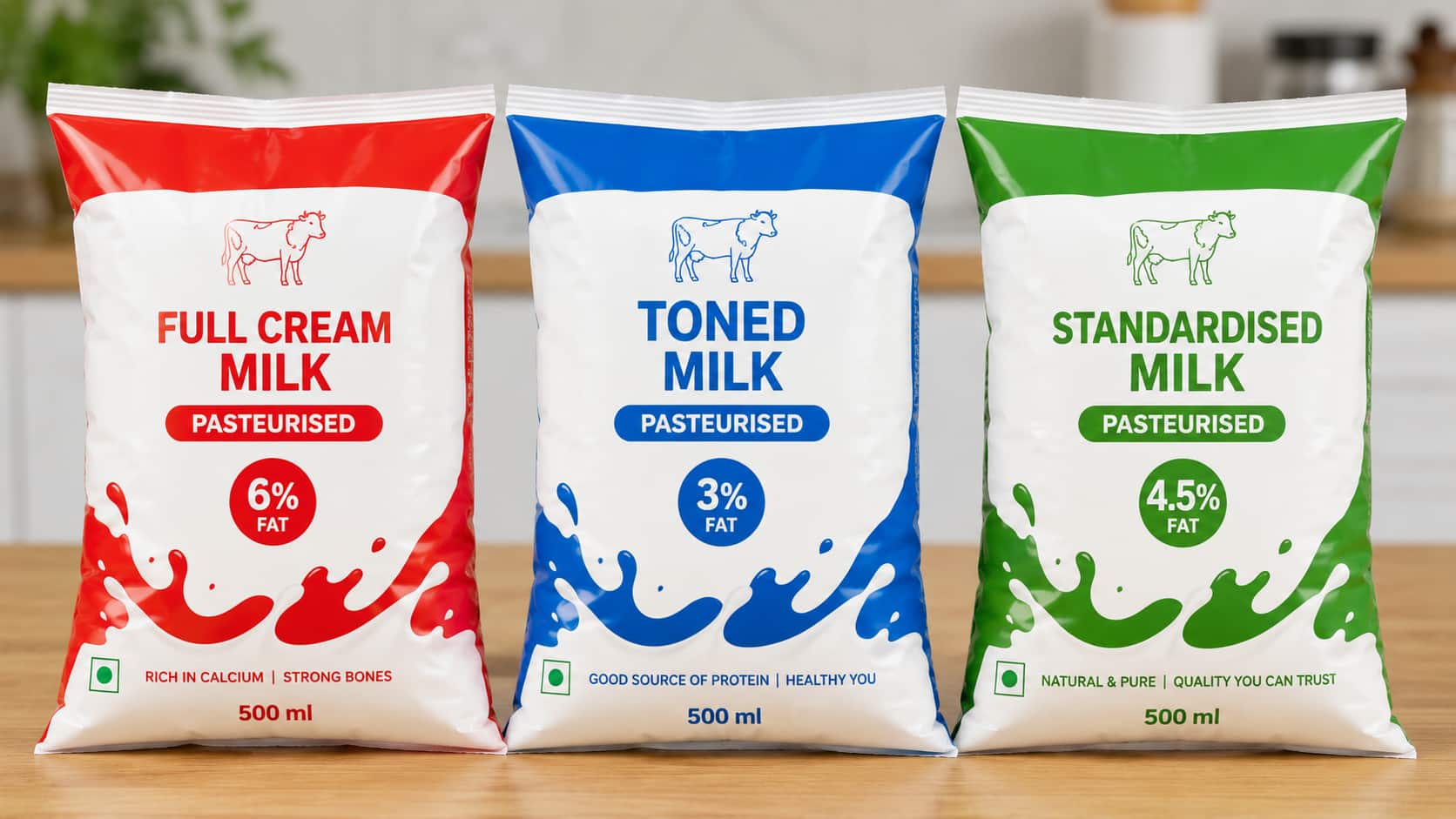
Ever noticed how milk packets in India are almost always colour-coded? Some come in blue, others in green, orange or purple and most regular buyers can identify their preferred milk just by spotting the packet colour from a distance. While many people assume the colours are part of branding or design, they actually serve a practical purpose linked to the type and fat content of the milk inside. For decades, dairy companies across India have used different colours to help consumers quickly distinguish between milk variants without needing to read detailed labels every time. The system has become so common that shoppers often ask for “green milk” or “blue packet milk” instead of naming the exact category. What the colours on milk packets mean Although the Food Safety and Standards Authority of India (FSSAI) regulates food labelling and safety norms, the packet colours are generally decided by dairy brands such as Amul, Mother Dairy and Aavin. The colours are mainly used to identify the fat percentage and milk category. Also Read: Stents Forced On Patients For Ayushman Funds? Lucknow's KGMU Under Scanner Typically, blue packets indicate toned milk with around 3% fat content. Green packets are commonly used for standardised milk containing nearly 4.5% fat, while orange packets usually represent full cream milk with around 6% fat. Some brands also use purple or magenta packaging for double-toned milk, which contains lower fat levels. This colour-based system allows consumers to instantly pick the milk best suited to their needs -- whether for daily tea and coffee, children, or richer preparations like curd and sweets. Why Dairy Brands Prefer Colour Coding Milk is one of the most frequently purchased grocery items in Indian households, and buyers usually make quick decisions while shopping. Since brands offer multiple variants of the same product, colour coding helps avoid confusion and speeds up the selection process. The colours also create strong product recall. Over time, many households begin associating a particular milk type with a specific colour rather than memorising fat percentages or technical labels. For dairy companies, the colour system is not just about packaging aesthetics. It acts as a simple visual guide that makes shopping easier, faster and more convenient for millions of consumers every day. Also Read: 10% Jet Fuel Hike, Rs 10,000 Crore Relief Fund: Inside Govt's Plan To Shield Airlines
Click here to Read more